

If you've ever sat in a small office-say, a 500-square-foot space shared by five people, or a startup team crammed into a corner of a co-working space-you know the constant hum: a colleague's client call bleeding into your project work, someone laughing at a bad joke that you can't help but overhear, a Slack notification pinging every three minutes that makes it impossible to focus on deep work. For small office operators, the balance between collaboration and quiet focus is never easy, and the question of whether acoustic office booths are worth the investment often feels like a coin flip. As a supplier of acoustic office solutions who's worked with dozens of small teams over the past three years, I've seen firsthand how these booths aren't just a luxury for big corporations-they can be a game-changer for small offices, if you pick the right fit. Let's break down the science, the tradeoffs, and what small teams actually need when it comes to adding a soundproofing solution to their space.
First, let's ground this in the real needs of small offices. Unlike Fortune 500 offices that might have dedicated meeting rooms, quiet rooms, and open work areas, small teams usually operate in a single open layout (or sometimes two tiny rooms total, if they're lucky). A 2023 study from the World Health Organization (WHO) found that office noise levels above 55 decibels-common in small open workspaces-reduce cognitive performance by 10 to 20 percent, particularly for tasks that require focus, like writing, coding, or data analysis. For small teams, every member's output directly impacts the business, so losing that focus isn't just an inconvenience-it hits the bottom line. But wait, small office managers often push back: "We don't have space for a huge booth," or "We can't afford something that's hard to install." That's exactly why the right acoustic booth is tailored to small spaces, not the bulky, one-size-fits-all models used in large offices.
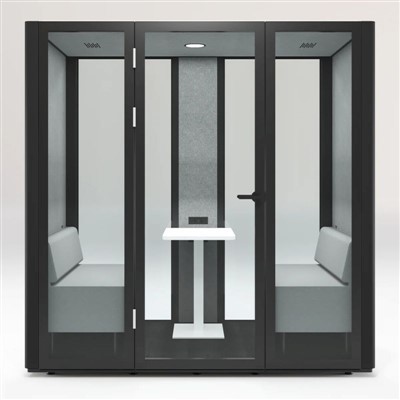
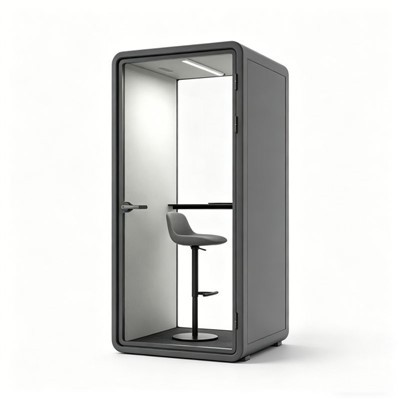
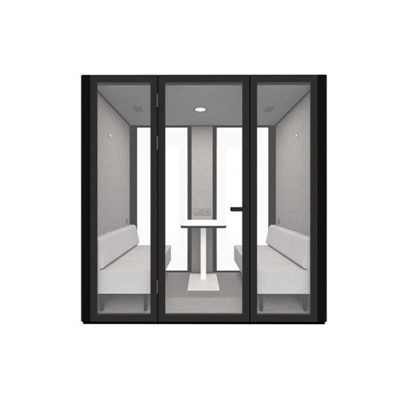
Let's start with space, the biggest pain point for small offices. I once worked with a 6-person marketing team in a 400-square-foot loft in Brooklyn. They'd tried shifting desks around, adding dividers, and even asking people to take calls in the stairwell, but the stairwell was drafty and loud, and dividers only reduced noise by about 3 decibels-barely a difference. We recommended a Single Person Soundproof Booth, which fits in a 4x4 foot footprint-small enough to tuck into a corner of their open layout, next to a window or along a wall. That's the beauty of modern acoustic booths: they're not the big, clunky pods you see in corporate lobbies anymore. A single-person booth is narrow enough to slide between two desks, while a Two-Person Acoustic Booth can fit in even the smallest nook, perfect for quick client calls or 15-minute brainstorming sessions without disrupting the whole team. I've also had a team of 8 in a Chicago startup that opted for a Multi-Person Acoustic Booth-wait, yes, multi-person models come in compact sizes too, designed specifically for spaces that don't have room for a separate meeting room. That 5x8 foot model fit right between their sales and design desks, so they could host 4-person check-ins without pulling people away from their workstations. The key here is that acoustic booths don't require you to rearrange your entire office; they adapt to the space you already have, which is make-or-break for small teams.
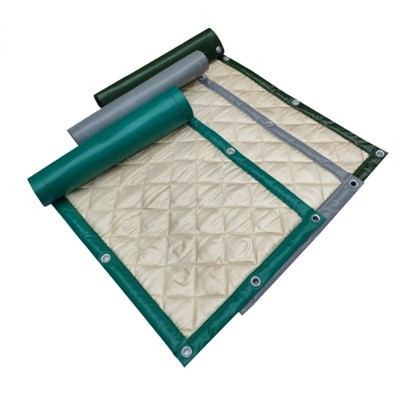
Next, the science of sound insulation-no overcomplicated jargon, just what matters for small offices. When I explain acoustic booths to a small team, I always talk about Noise Reduction Coefficient (NRC), a scale that measures how much sound a material absorbs. Most low-quality dividers have an NRC of 0.3, meaning they only absorb 30 percent of sound. The booths we supply have an NRC of 0.85 or higher, which means they absorb 85 percent of sound. That's the difference between a colleague's phone call being heard two desks over, and being contained almost entirely inside the booth. For small offices, this is critical because there's nowhere else to escape noise. Another big factor is ease of installation, which is a non-negotiable for small teams-you don't have time to wait for a contractor to come rip out walls or do electrical work. All the booths we offer (including the Sound Proof Office Booth line) are prefabricated, lightweight, and take less than an hour to set up. You just level the floor, snap the panels together, and plug in the small ventilation fan. No construction permits, no downtime-perfect for small teams that can't afford to have half their office out of commission for a week.
Now, let's address the common pushbacks I hear from small office managers. First: "We collaborate a lot-won't a booth make us isolated?" The short answer is no, if you pick the right mix. Small teams need both quiet focus and quick collaboration, and acoustic booths strike that balance. For example, the Soundproof Pods Office line includes flexible models that have mesh panels on the top or sides, so you can still see and communicate with the rest of the team when you're inside. A developer can work in a single-person booth with the mesh side open, taking quick questions from a designer without leaving their space, while a small group can huddle in a two-person booth for a 10-minute brainstorm. I saw this work perfectly for a 7-person coding team in Austin; they had three single-person booths for individual deep work and one two-person booth for peer reviews. They reported that their focus-related tasks went up by 25 percent in the first month, and they didn't lose any of their quick collaboration because they still interacted when they weren't in the booths. The second pushback: "It's too expensive." I get it-small office budgets are tight. But let's do the math. A high-quality single-person acoustic booth costs roughly the same as a few months of a part-time admin, or less than the average bonus for a single employee. Compare that to the cost of employee turnover: a 2022 study from Gallup found that disengaged employees cost businesses 18 percent of their annual salary, and focus-related noise is a top cause of disengagement. For a team of five, that's a real number, and the booth pays for itself in reduced turnover and higher productivity.
Wait, but what about small offices that are in co-working spaces? I've worked with a handful of teams that are part of shared co-working spaces, and acoustic booths are even more valuable there because the noise comes from other teams, not just your own. A freelance graphic designer in a Portland co-working space told me that before she got a single-person booth, she could hear a yoga class in the adjacent room, a sales team making calls next door, and a printer across the hall-all at the same time. Her productivity dropped so much that she almost moved to a private space. Once she set up the booth, she told me she could focus for four hours straight without being interrupted, and she renewed her co-working membership. That's a win-win for both the team and the co-working space, too, because it reduces noise complaints for the space operator.
Of course, there are caveats-acoustic booths aren't right for every small office, and picking the wrong model can be a waste of money. The biggest mistake small teams make is buying a booth that's too big. A 10-person multi-person booth in a 500-square-foot office is just a waste of space, and it might even make the open area feel more cramped. The right approach is to audit your team's needs first. Ask: How many people need quiet work at the same time? How often do we have small meetings or client calls? For a team of four, that might mean two single-person booths for focused work and nothing else. For a team of seven that does regular 3-person check-ins, a two-person booth plus a single-person booth works. For a team that does a lot of group work but still needs individual focus, a compact Multi-Person Acoustic Booth that fits 3-4 people is a great fit. Another mistake is not considering ventilation-some cheaper booths have poor airflow, leading to stuffiness inside, which makes people avoid using them. All the booths we supply have quiet, low-power ventilation systems that keep air circulating without adding to the noise inside or out, so you won't hear a hum through the walls.
Over the past three years, I've helped small teams of all sizes-from 2 to 12 people-add acoustic booths to their spaces, and the consistent feedback is that these booths aren't a luxury, they're a necessity for balancing focus and collaboration. They don't take over your space, they're easy to install, and they pay for themselves in better productivity and happier employees. If you're a small office manager weighing whether to take the leap, the key is to look at your specific needs, not what big corporations are using. The right acoustic booth will fit your space, your budget, and your team's workflow-no fancy construction required.


If you're ready to explore which acoustic office booth is right for your small office, our team can help you assess your space, your team's needs, and walk you through the best options without any pressure. Reach out to our team to start a conversation about finding the perfect soundproofing solution for your workspace.
References:
- World Health Organization. (2023). Noise and Health: A Review of Evidence on the Impact of Occupational Noise on Cognitive Performance. Geneva: World Health Organization.
- Gallup. (2022). State of the Global Workplace: Employee Engagement and Disengagement. Washington, DC: Gallup Inc.
- National Institute for Occupational Safety and Health (NIOSH). (2021). Occupational Noise Exposure Guidelines for Office Environments. Cincinnati, OH: U.S. Department of Health and Human Services.