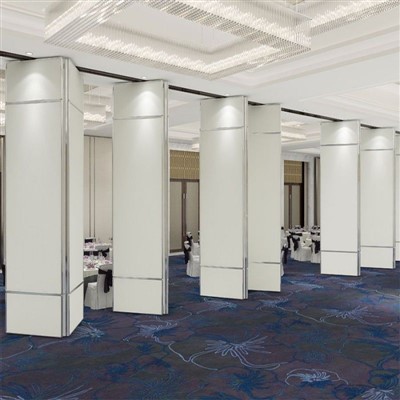


When it comes to modern interior design and space management, Automatic Movable Partitions have emerged as a game - changer. These partitions offer flexibility, functionality, and aesthetic appeal, making them a popular choice for various commercial and residential settings. As a leading supplier of Automatic Movable Partition, I am here to explore the different control methods available for these partitions.
Manual Control
The most basic form of control for an Automatic Movable Partition is manual control. This method involves physically moving the partition panels by hand. It is a straightforward and cost - effective option, especially for smaller partitions or spaces where full automation is not necessary. Manual control is often used in settings such as small offices, home studios, or retail stores.
One of the advantages of manual control is its simplicity. There is no need for complex electrical systems or programming. Users can easily adjust the position of the partition to create the desired space configuration. However, it also has its limitations. Manual operation can be time - consuming, especially for large partitions. Additionally, it may require some physical effort, which could be a drawback for users with limited mobility.
Remote Control
Remote control is a popular choice for Automatic Movable Partitions. With a remote control, users can operate the partition from a distance, providing convenience and ease of use. This control method is ideal for large spaces, such as convention centers, auditoriums, or large offices.
Remote control systems typically use radio frequency (RF) or infrared (IR) technology. RF - based remote controls offer a longer range and can penetrate through walls, making them suitable for larger areas. IR - based remote controls, on the other hand, require a direct line of sight between the remote and the partition control unit.
The benefits of remote control are numerous. It allows for quick and easy adjustment of the partition position without the need to physically approach the partition. This is particularly useful in situations where the partition needs to be adjusted frequently, such as during events or meetings. However, remote control systems can be more expensive than manual control systems, and they may require periodic battery replacement.
Wall - Mounted Control Panels
Wall - mounted control panels provide another option for controlling Automatic Movable Partitions. These panels are typically installed on the wall near the partition and offer a more permanent and accessible control solution.
Wall - mounted control panels can be customized to include various functions, such as opening, closing, and adjusting the speed of the partition movement. They can also be integrated with other building systems, such as lighting and HVAC, to create a more seamless and automated environment.
One of the advantages of wall - mounted control panels is their durability and reliability. They are designed to withstand regular use and are less likely to be lost or damaged compared to remote controls. However, they require professional installation, which can add to the overall cost.
Programmable Logic Controller (PLC)
For more advanced control requirements, a Programmable Logic Controller (PLC) can be used to control Automatic Movable Partitions. A PLC is a digital computer used for automation of industrial processes, including the operation of partitions.
PLCs offer a high level of flexibility and customization. They can be programmed to perform complex sequences of movements, such as opening and closing the partition at specific times or in response to certain events. This makes them suitable for large - scale applications, such as hotels, hospitals, and corporate offices.
The use of a PLC also allows for integration with other building management systems. For example, the partition can be programmed to open and close in conjunction with the lighting and ventilation systems, creating a more energy - efficient and comfortable environment. However, PLC systems are more complex and expensive to install and maintain compared to other control methods.
Sensor - Based Control
Sensor - based control is an innovative approach to controlling Automatic Movable Partitions. Sensors can be used to detect the presence of people, objects, or changes in the environment, and then automatically adjust the position of the partition accordingly.
There are several types of sensors that can be used, including infrared sensors, ultrasonic sensors, and motion sensors. Infrared sensors can detect the heat emitted by people or objects, while ultrasonic sensors use sound waves to detect movement. Motion sensors can detect changes in the surrounding environment.
Sensor - based control offers a high level of automation and convenience. For example, in a meeting room, the partition can automatically open when people enter the room and close when they leave. This not only saves time but also enhances the overall user experience. However, sensor - based control systems can be more expensive and may require regular calibration to ensure accurate operation.
Integration with Building Automation Systems
In modern buildings, Automatic Movable Partitions can be integrated with building automation systems. This allows for centralized control of the partitions along with other building functions, such as lighting, heating, and security.
Building automation systems use a network of sensors, controllers, and software to manage and monitor the building's operations. By integrating the Automatic Movable Partitions with these systems, users can control the partitions using a single interface, such as a touchscreen or a mobile app.
The benefits of integration with building automation systems are significant. It provides a more efficient and convenient way to manage the building's space. For example, the partitions can be programmed to open and close based on the occupancy of the space, the time of day, or other factors. This helps to optimize energy consumption and improve the overall comfort of the building.
Considerations for Choosing a Control Method
When choosing a control method for an Automatic Movable Partition, several factors need to be considered. These include the size and complexity of the partition, the frequency of use, the budget, and the specific requirements of the space.
For smaller partitions or spaces with infrequent use, manual control or remote control may be sufficient. These methods are relatively simple and cost - effective. For larger partitions or spaces with high - frequency use, more advanced control methods, such as PLC or sensor - based control, may be required.
Budget is also an important consideration. More advanced control methods, such as PLC and sensor - based control, are generally more expensive to install and maintain. However, they offer greater functionality and automation, which may be worth the investment in the long run.
The specific requirements of the space, such as the need for integration with other building systems or the need for a high level of automation, also play a role in the choice of control method. For example, if the partition needs to be integrated with the building's lighting and HVAC systems, a building automation system may be the best option.
Conclusion
In conclusion, there are several control methods available for Automatic Movable Partitions, each with its own advantages and disadvantages. Manual control offers simplicity and cost - effectiveness, while remote control provides convenience and flexibility. Wall - mounted control panels offer durability and reliability, and PLCs and sensor - based control offer advanced functionality and automation.
As a supplier of Automatic Movable Partition, Soundproof Movable Partition, and Folding Glass Partition Walls, we understand the importance of choosing the right control method for your specific needs. Whether you are looking for a simple manual control system or a more advanced building automation solution, we can provide you with the expertise and products to meet your requirements.
If you are interested in learning more about our Automatic Movable Partitions and the available control methods, or if you would like to discuss your specific project needs, please feel free to contact us. We are here to help you create the perfect space solution for your commercial or residential setting.


References
- Building Automation Handbook, 2nd Edition
- Modern Interior Design: Trends and Innovations
- Partition Systems: Design and Installation Guide